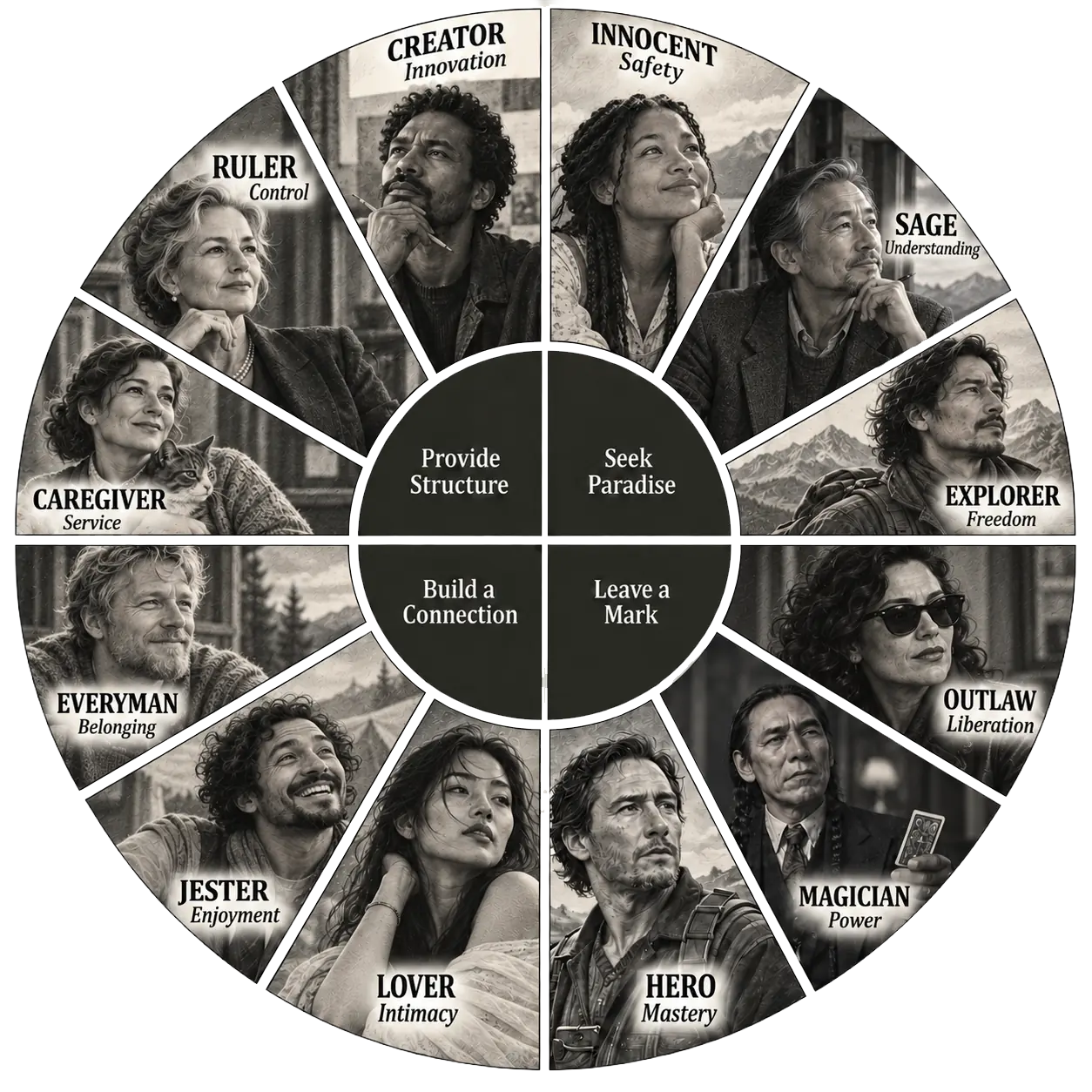
Character Archetypes
The Caregiver: The Life-Sustaining Archetype
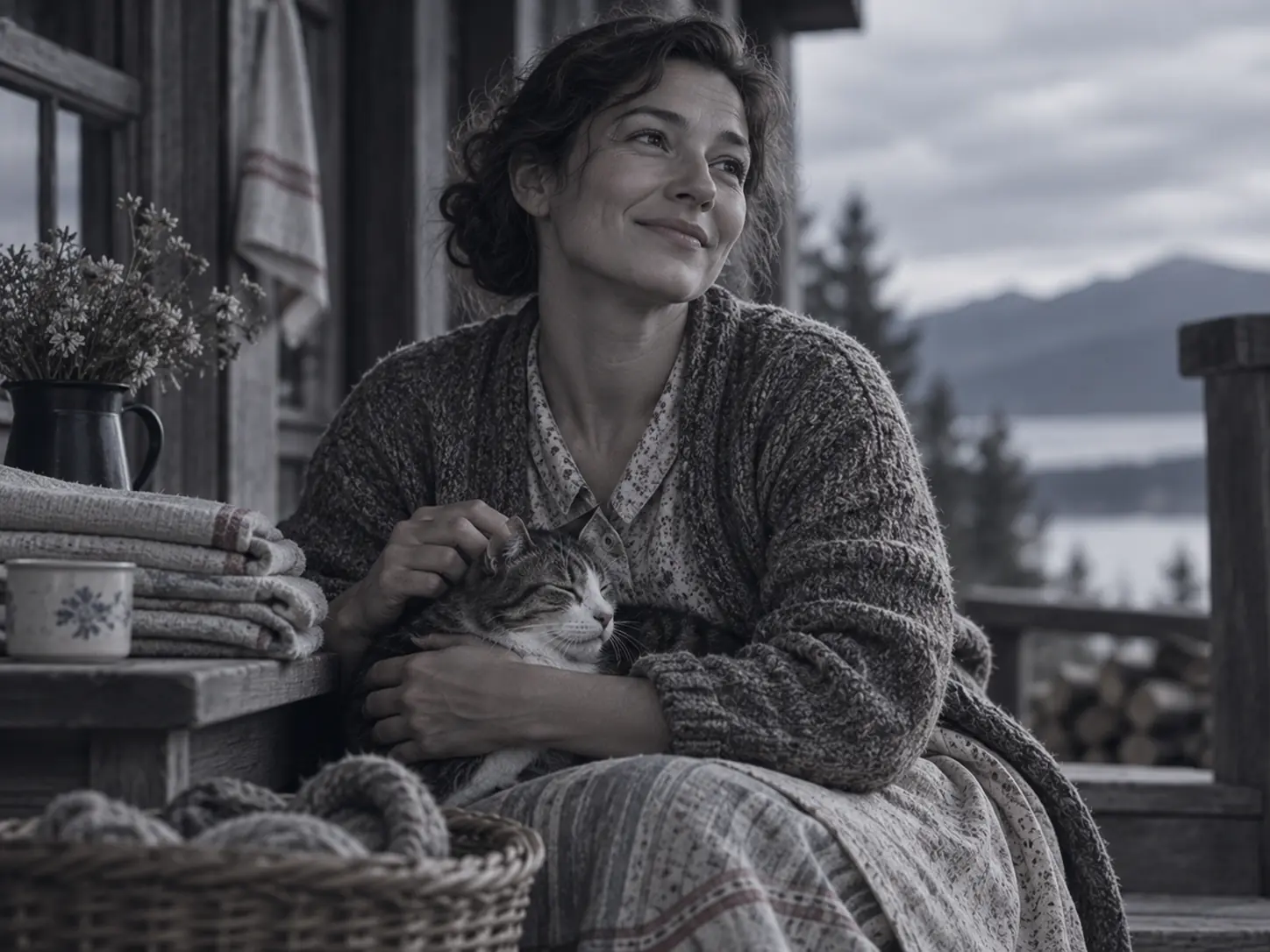
The Caregiver is not the archetype of kindness.
Kindness can be brief: an impulse, a gesture, a donation, a sympathetic word. Care begins when somebody's needs become your responsibility. You have to remember the medication, notice the fever, prepare the meal, and listen to the same fear again. And again.
Care is unglamorous. It is vomit, feces, urine, sweat, blood, pus, and tears, often your own. Bodily fluids of every color, consistency, and smell must be whisked away, and then whisked away again tomorrow.
We all begin life needing care, and most of us end it that way. The archetype appears wherever one person recognizes that another cannot manage alone and chooses not to abandon them.
The Caregiver's core desire is to protect. Its core fear is subtler: being selfish, or being unneeded. Everything good and everything dangerous about the archetype grows from those two root motives.
The Origin of the Archetypal Caregiver
Long before mothers, nurses, and wise women, myth understood the Caregiver through what happens when care stops.
In Ancient Greek mythology, when Persephone is taken to the underworld, her mother Demeter grieves and stops tending the earth. Crops fail. The world starves. The gods, who had ignored the harvest goddess as long as the harvest came, suddenly have to negotiate. Demeter's story shows care's power through its withdrawal: civilization discovers what it depends on only when the tending ends.
Hestia, goddess of the hearth, is the opposite case. She keeps the fire burning at the center of every home and temple, and she has almost no stories of her own. She is the archetype's invisibility made divine. Her work is everywhere and therefore unremarkable.
Chiron, the wise centaur who trained heroes and healers, is wounded by a poisoned arrow he cannot cure. He can heal everyone but himself. The wounded healer is one of the archetype's oldest truths: the people who tend others are often tending around a wound of their own.
Contempt for Dependency
The role is not constrained by gender, profession, or temperament, but it has fallen to women more often than not. Today it also belongs to nurses, teachers, aides, home-health workers, and social workers, who formalize what families are expected to do by instinct and give it an hourly wage.
Society praises care constantly and values it almost not at all. Contempt for dependency helps conceal society's own dependence on caregivers. Unpaid care is treated as outside the economy until illness or old age arrives and families rediscover how expensive and difficult care has always been.
The Paradox of Care
The Caregiver is the only archetype whose victory is either its own obsolescence or an inevitable loss.
Care for a child succeeds by making itself unnecessary. Good care makes a person more secure and more capable, not smaller. The child who no longer needs you is the proof that you did it right.
Care for the dying has no such victory. The Caregiver at a deathbed is not trying to win. They are trying to keep a life worth living for as long as it lasts, with safety and dignity intact, knowing how it ends.
Either way, the Caregiver works toward a future in which they are not needed. That is a hard thing to want, and the archetype's shadow lives in juxtaposition with that difficulty.
What Caregiving Taught Me
This was the hardest archetype essay for me to write—personally, because my mother deputized my older sister and me to raise our half-siblings, who were ten years younger. I still resent a childhood in which I was denied care and gave substandard care, because I was a child myself. And while I am fiercely defensive when anyone forces the burden of caregiving on a child, an elderly person, or anyone who is vulnerable and dependent themselves, I'm also ready to fight right now just thinking about it.
For the record, my mother earned her undergraduate and graduate degrees without ever hiring a babysitter. If she had been a single mother, I would understand. But it was a bit of a vanity degree for a woman with a securely employed husband, who estranged the daughters she exploited.
And so I learned that the Caregiver may be the most necessary and most dangerous archetype.
The Shadow Caregiver
Remember the core fear: being unneeded. A Caregiver who cannot bear that fear will make sure it never comes true. Nurturing becomes infantilization, generosity becomes a ledger of debts, protection becomes ownership. Or the shadow turns the other way, into neglect, where the Caregiver guards their reputation by denying others access to the person in their care.
From the perspective of someone who needs care, this is unthinkable. But the unpaid labor of caregiving lowers a person's lifetime earning potential, places strain on other relationships, and leaves the caregiver alone in the end.
Responsibility can create authority, but it does not create ownership. The Caregiver remains a moral force only while the person being cared for remains a person rather than a possession.
The shadow Caregiver sincerely believes:
«I am the one who loves you most—so I am the one who knows best.»
Mother Gothel in Tangled is the archetype's devouring face in its purest form. She keeps Rapunzel helpless, frightened, and grateful, because a Rapunzel who could manage alone would leave. The helicopter parent who cannot let a child fail and the partner who treats concern as surveillance are milder versions of the same danger.
The Caregiver Among the Archetypes
Stories love departure, conquest, and transformation. They are less interested in maintenance, repair, and repetition. A battle is dramatic; cleaning the wound afterward is not. The Hero saves people, but somebody still has to feed the survivors, rebuild the roof, and make sure the next generation can sleep.
The line between the two archetypes is thinner than it looks. A firefighter trapped with the person they were carrying shifts instantly from Hero to Caregiver. Samwise Gamgee spends The Lord of the Rings cooking, rationing, and keeping Frodo alive, and when Frodo can no longer walk, Sam carries him up Mount Doom. The Caregiver's story might be better understood as a hero's journey too long and repetitive for anyone else to watch.
Why do we, as writers, often misread the archetype? We often see it through the eyes of the Innocent, the protected child. The child experiences warmth, safety, and the sense that the world will hold together because somebody capable is nearby.
The child experiences protection and love. The Caregiver experiences the cost of making that experience possible.
Write from the child's side and you get the worried mother and the soup-bearing friend, background figures stripped of ambition and desire. Write from the Caregiver's side and you find the drama: what they are willing to give, what they cannot give, and what happens when that duty grows large enough to swallow them all.
Iconic Caregivers
Molly Weasley is the healthy Caregiver: fierce, domestic, and terrifying when her people are threatened. Her home is where frightened children like Harry Potter are fed, sheltered, and treated as though they belong.
Alfred Pennyworth's care has authority because it is grounded in competence, loyalty, and a willingness to tell Bruce Wayne what he does not want to hear. To Alfred, he's not Batman. He's a man who lost his parents before he was ready.
Baymax of Big Hero 6 makes the role literal, then discovers that healing means more than diagnosis. He has to learn the difference between preserving someone's body and helping them return to themselves.
But my personal favorite, Marilla Cuthbert begins Anne of Green Gables as a reluctant Caregiver. Her love changes her without dissolving her severity as she learns that care cannot mean forcing someone into the shape you find most comfortable.
Katara's care is one of her greatest strengths in Avatar: The Last Airbender, and also the source of her urge to manage everyone. She knows how often someone must step up when others are careless, and that knowledge convinces her she must always be the responsible one.
Writing the Caregiver
If you give the Caregiver a burden they chose, inherited, or were trapped into carrying, decide what they protect, what care costs them, and where their attention becomes dangerous.
A reluctant Caregiver may resent the burden before discovering love within it. A failed Caregiver may have been unable to save someone. A controlling Caregiver may confuse another person's well-being with their obedience. And don't get me started on Munchausen by Proxy.
Give them their own desires, a limit beyond which they will not go, and a reason they might be wrong. Let them be tender without making them weak or powerful with healthy boundaries.
Write a Caregiver who understands, better than most, that civilization is held together by their sacrifice.